Book soon Openers · London
Garage Door Opener Diagnosis and Repair
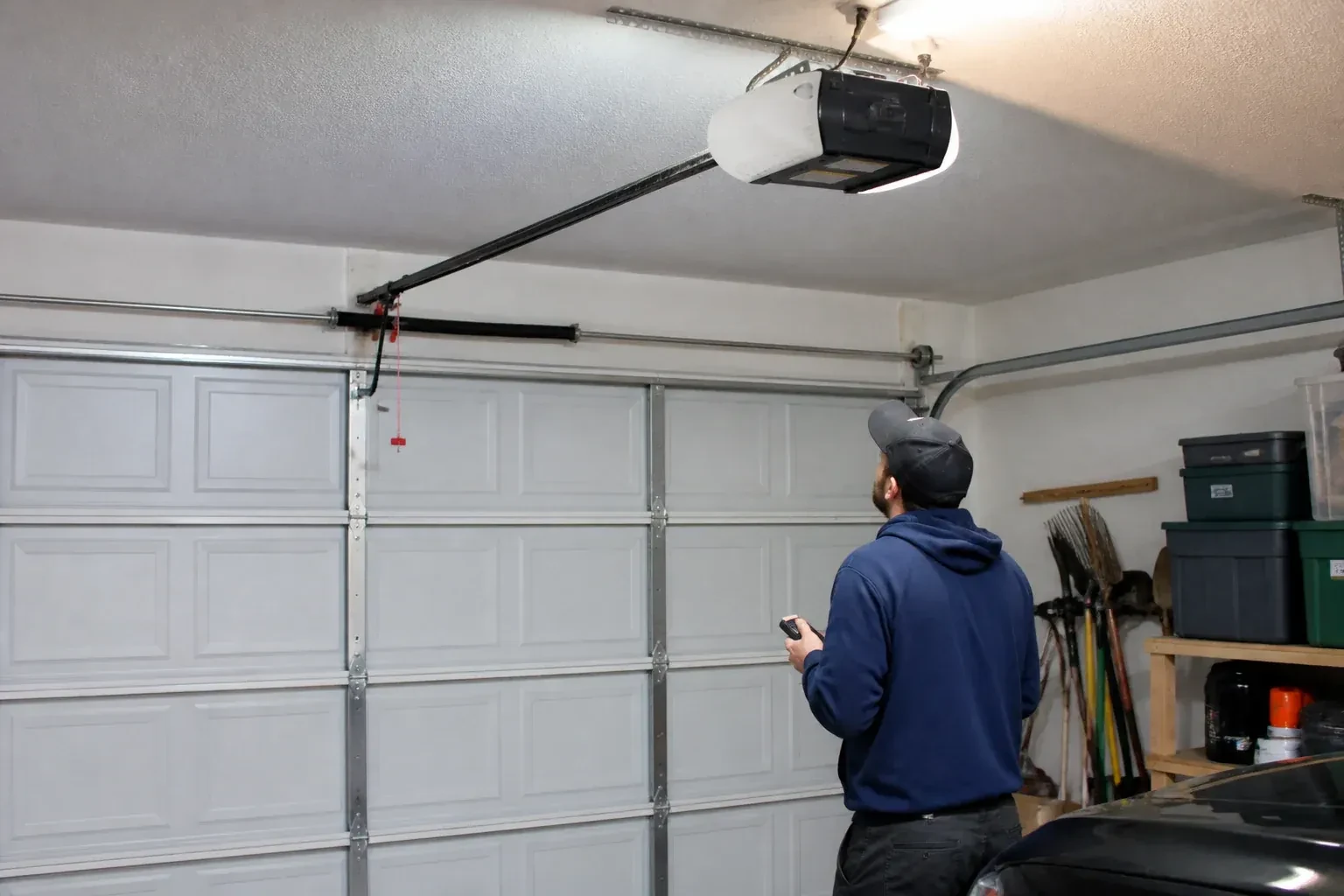
You press the remote from the driveway and hear the motor hum overhead, a steady drone with no movement behind it. The door stays shut.
Call now · open 24/7(226) 270-3930Right now
Before the door is looked at
Call (226) 270-3930, open 24/7.
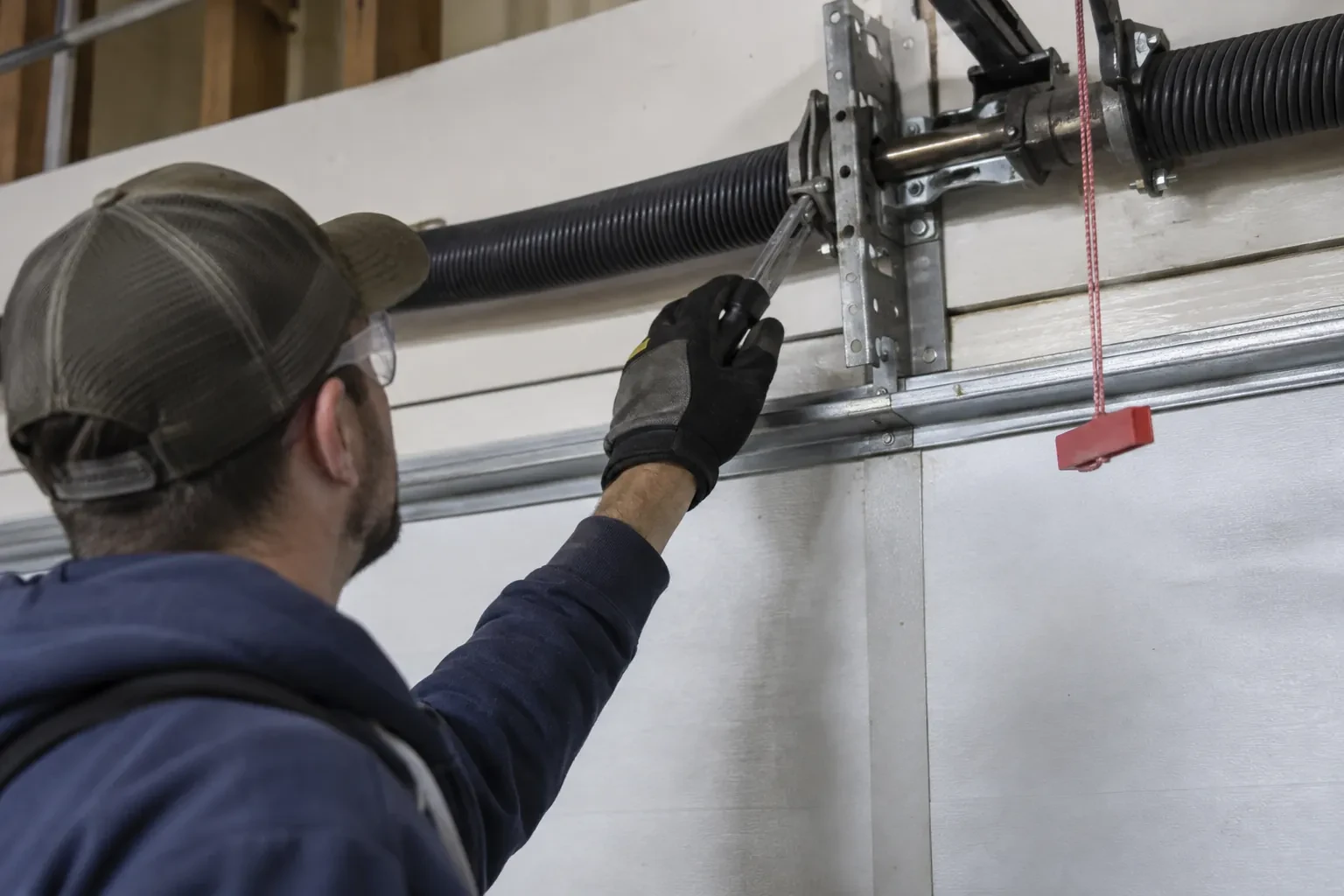
Pull the release with the door fully closed whenever possible, and keep the opening clear as you do. Once the trolley lets go, the door is held by its springs alone, and a closed door can still shift unexpectedly.
Never drive a vehicle at a closed door to get out; the door collapses and the stored tension in the counterbalance is released. Use the release, the outside key release, or a technician.
In freezing weather, check that the bottom seal has released from the slab before using the opener; a door frozen to the floor is the most common winter route to slack cables and a crooked door.
In plain words
Think of a command travelling through the system. Your thumb presses a button; the radio signal reaches the receiver; the logic board decides to move; the motor turns; a gear drives a chain, belt or screw; the trolley pulls the arm; the arm moves the door. A fault at any link produces the same result from where you stand: nothing happens. Diagnosis walks that chain in order and finds the broken link, whether it is a flat remote battery at the start or a stripped gear in the middle. Working from one end keeps the fix small and the explanation simple.
How the visit goesYou press the remote from the driveway and hear the motor hum overhead, a steady drone with no movement behind it. The door stays shut. Press again and the hum returns, then quits, as if the machine is trying and cannot get a grip on anything.
Garage Door Opener Diagnosis and Repair · London
How the visit goes
- 1
The story before the tools
Diagnosis begins with what you saw and heard. When did the door last behave, and what changed between then and now: a power outage, a storm, a new light bulb, a shovel leaning against the sensor, someone pulling the red cord? Does the motor hum, click, run or stay silent? Does the fault follow one control or all of them? Is the door stranded up or stranded down, and does it move at all by hand? A few minutes of this on the phone or at the door points the technician at one part of the system instead of all of it, and often shortens the visit considerably.
- 2
Controls, remotes and programming
Control faults are corrected at the control that failed. A wall console in lock mode is released by holding its lock button until the indicator stops flashing. Remotes get fresh batteries of the type the maker specifies, then are reprogrammed to the head unit with its learn button if the memory was cleared. Range problems are traced to interference, most often from certain LED bulbs in the opener's own sockets, and cured by swapping bulbs or extending the antenna wire. A wall control with a shorted or pinched cable gets new low-voltage wire; a failed receiver or wall control is replaced with one compatible with the opener's frequency and coding.
- 3
Ready for the cold months
After a winter diagnosis the door is set up for the season rather than for the day. The bottom seal has been freed and, if it was tearing, replaced, with a light silicone wipe so it releases from the slab. Moving parts carry a low-temperature lubricant. The photo eyes have been cleaned and, where low sun was blinding one, shaded or swapped side to side. Force has been set for a cold, stiff door without being pushed up to hide one. Keep snow and ice cleared from the threshold and the sensor lenses, and expect the door to be a shade slower on the coldest mornings.
In the van
- Logic board or receiver
- Start capacitor
- Chain or belt
- Travel limit switch or RPM sensor
- Remote batteries (coin and cylinder cells)
What affects the quote
- 1
Getting in when the door is stuck shut
A garage with no side door and no house connection means working the release from outside before any test can begin, and the quote includes that entry step.
- 2
Age and model of the unit
Parts availability is checked by exact model and part number rather than assumed from age, since some units even from the last two decades already have a board or component discontinued with nothing to replace it. Sourcing a part, or replacement instead, shapes the quote.
- 3
Distance to your door
Travel is part of the visit. An address across town and a rural property at the end of a concession road involve different driving, and the quote reflects the trip.
Same fees day, night or weekend.
Garage Door Opener Diagnosis and Repair: questions
Why does my door go back up when I try to close it?
The opener believes something is in the way. Either the photo-eye beam near the floor was broken, misaligned or blocked, or the door met more resistance than its force setting allows, often from a frozen seal, stiff rollers or a travel limit set slightly too long so the door hits the slab. The indicator light on the head unit usually tells which of the two it was, and the technician confirms it by testing rather than guessing.
How do you tell whether it is the opener or the door?
By separating them. With the door closed, the emergency release is pulled so the opener is out of the picture, and the door is lifted by hand. A balanced door rises without strain, hangs where you leave it around waist height and stays open at the top. If it does, the opener is at fault. If it is heavy, drifts or binds, the door is the cause and the opener was only reporting the strain. This one check prevents a great many wrong repairs.
The motor hums but the door stays put. What is usually wrong?
A hum with no movement means the motor is receiving power but something is stopping it turning, or stopping its turn from reaching the door. On AC units a failed start capacitor is the common cause; on chain-drive heads a stripped nylon drive gear is the other. Less often the trolley has simply been released from the carriage. Each of these is a routine repair once identified, and the hum is one of the more helpful sounds an opener makes.
Openers & Access
Bigger photo, sooner job: Emergency Book soon Plan ahead
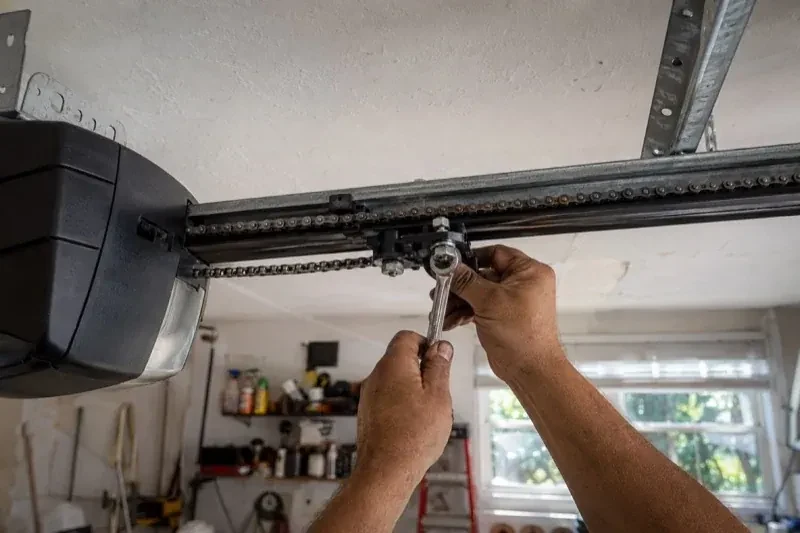 Book soonChain-Drive Opener RepairThe motor runs, you can hear it working, but the door never moves.
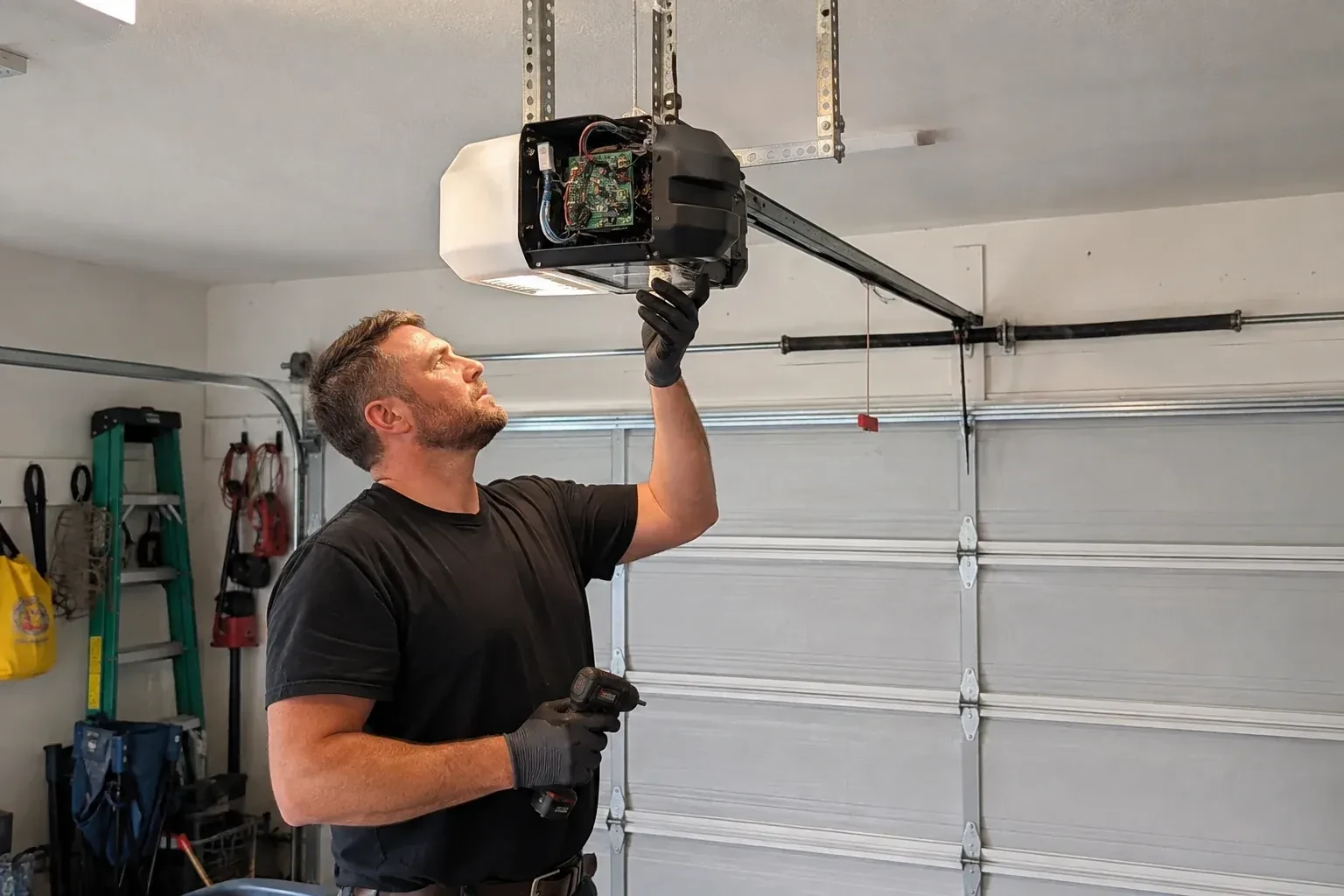 Book soonBelt-Drive Opener RepairSomeone tightened the belt last month to stop the sag.
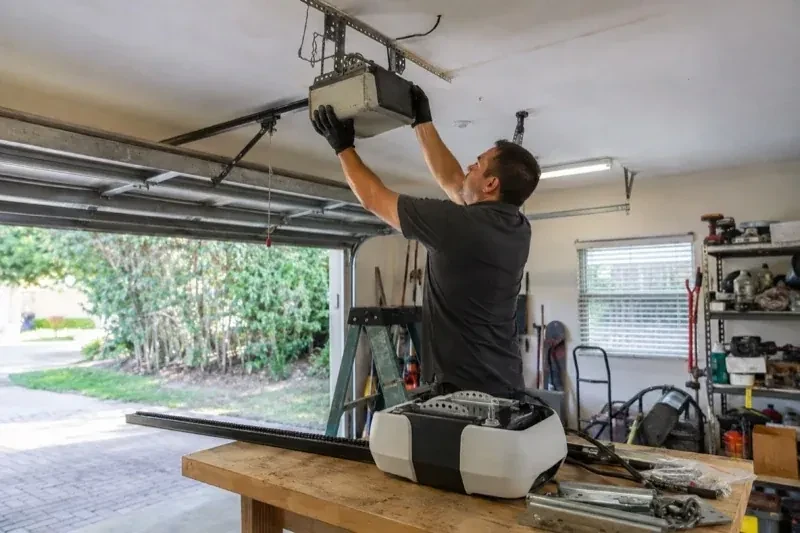 Plan aheadGarage Door Opener Replacement
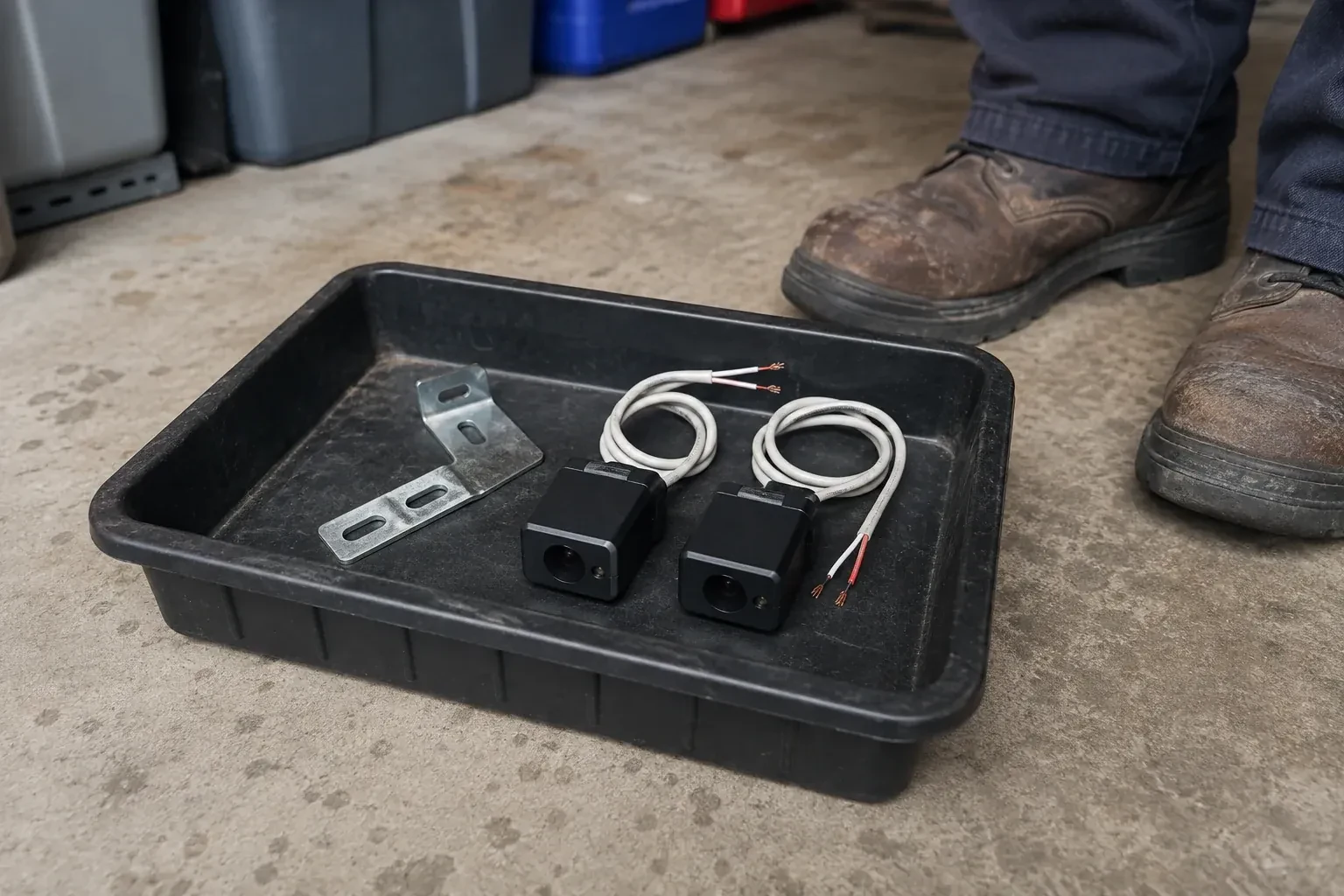 Book soonPhoto-Eye Sensor Alignment or ReplacementOn bright mornings the door will not close, then by lunchtime it behaves itself.
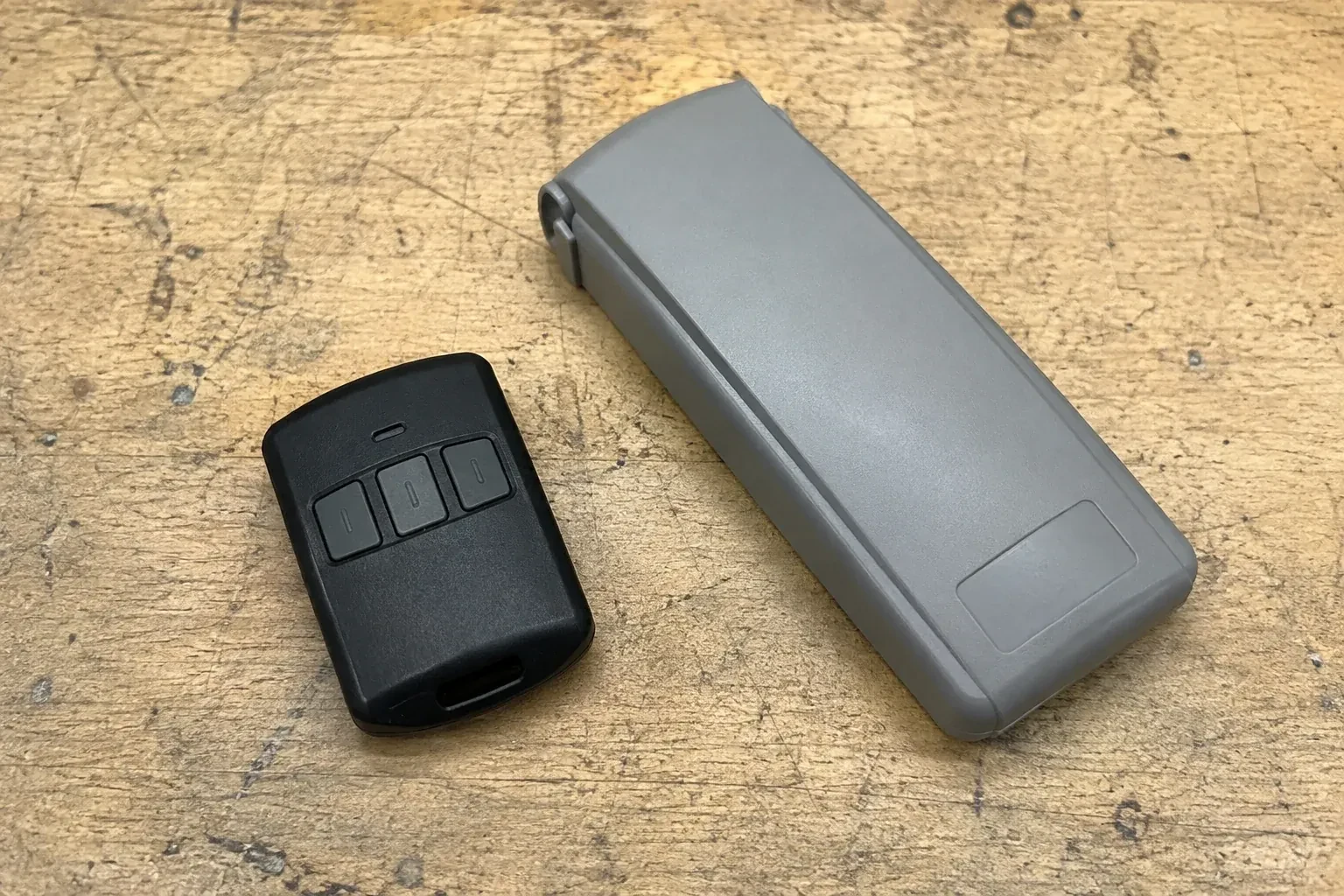 Plan aheadGarage Door Remote and Keypad Programming
Garage Door Opener Diagnosis and Repair near you
Middlesex, Ontario
London information
- Town
- London, Middlesex, Ontario
- In business
- 12 years
- Hours
- Open 24/7 · nights, weekends and holidays, same fees
- Phone
- (226) 270-3930
- Visits
- On-site assessment preferred. Request a visit or call.
What the census means at the door
52%
Older homes. About 52% of homes in London were built in 1980 or earlier, according to the 2021 Census.
Older houses frequently have a garage door that was replaced once already, sometimes with a door chosen for the opening rather than the building. When that door reaches its end, there is a chance to pick a style that suits the house properly, and we measure with that in mind.
49%
A mix of homes. Single-detached houses make up about 49% of homes in London (2021 Census).
In a neighbourhood with both detached and attached homes, some customers decide alone and others report to a board or property manager. We adapt the visit accordingly, giving a homeowner options at the door and a manager a written summary they can circulate.
Nearby
Open 24/7
Request a visit
You press the remote from the driveway and hear the motor hum overhead, a steady drone with no movement behind it.
Call now · open 24/7(226) 270-3930- On-site assessment preferred
- Same fees day, night or weekend
- 12 years in business