Book soon Openers · London
Chain-Drive Opener Repair
The motor runs, you can hear it working, but the door never moves. When you look up, the sprocket on top of the head is barely turning, and there is a little drift of pale plastic dust on the cover.
Call now · open 24/7(226) 270-3930Right now
Before the door is looked at
Call (226) 270-3930, open 24/7.
Pull the release with the door fully closed whenever possible, and keep the opening clear as you do. Once the trolley lets go, the door is held by its springs alone, and a closed door can still shift unexpectedly.
Never raise the force setting to push a door through a frozen seal, a stiff track or a tired spring; force is set as low as reliably closes the door, and the reason the door is hard to move is fixed instead.
In plain words
Here is how a visit runs. The technician watches the door run once, then unplugs the operator, pulls the red release and lifts the door by hand to confirm the springs are doing their job. The head cover comes off and the gear, sprocket shaft and capacitor are looked at. The chain, trolley, rail and hangers are inspected along their full length. Worn parts are swapped for the model's own, the chain is phased and tensioned, the limits and force are set, and the door is tested against a block on the floor and an interrupted sensor beam. You are shown the release handle and the monthly checks.
How the visit goesThe door closes, touches the floor, then climbs straight back up as if it hit something. Nothing is in the way, the sensor lights are steady, and it has been doing this since the weather turned.
Chain-Drive Opener Repair · London
How the visit goes
- 1
Rail, hangers and the bracket in the wall
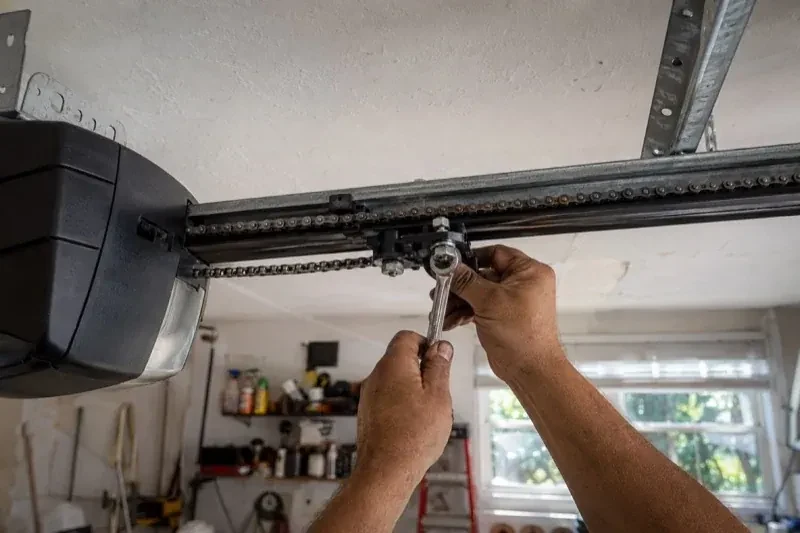
The rail is a structural part of the drive, and a chain cannot run true on a rail that moves. The technician checks that the perforated angle iron hanging the head from the joists is tight and stiff, that the rail is level along its length and angled slightly down away from the header, and that the splice plates at the rail joints are snug. The header bracket above the door is checked for lag screws that have loosened in the wood, which lets the whole rail lift a little on each cycle and shows as a rattle along the garage. Loose hardware is tightened or replaced before tension is set, since a flexing rail makes the measurement meaningless.
- 2
Truing and securing the rail
A rattling or flexing rail is corrected before any adjustment is trusted. Loose lag screws in the header bracket are tightened or moved to fresh solid wood, and a bracket that has split the framing is re-mounted. The angle-iron hangers at the head are tightened and braced diagonally so the head cannot swing, and the rail is checked with a level along its length and set with a slight fall away from the header so the trolley runs freely. Splice plates at rail joints are snugged and any burr where the trolley has caught is dressed smooth. The rail is then wiped of old grease and given a thin coat of white lithium grease where the trolley runs.
- 3
A record of the drive as it is now
Before leaving, the technician writes down what was found and what was fitted: the operator's model and age, whether the gear kit, sprocket, chain, trolley or rail hardware was replaced, the tension figure set, the limit and force positions, and the results of the reversal tests. The manual is hung near the wall control so the model's own instructions are at hand for the monthly tests. This note makes any future call a short conversation, tells a home inspector what has been done, and gives whoever owns the house next a clear picture of what is hanging over the car.
In the van
- Idler sprocket or pulley
- White lithium grease
- Sprocket and shaft assembly
- Cold-rated garage door lubricant
- Rail hangers and header bracket
What affects the quote
- 1
Electrical parts inside the head
A swollen capacitor, a failed RPM sensor or a damaged board found during the inspection are quoted separately from the mechanical drive, since each is a distinct component for that model.
- 2
Door work found at the balance check
If the door is heavy or drops when lifted by hand, spring adjustment or replacement is quoted as door work in its own right, ahead of the drive repair that depends on it.
- 3
When the visit happens
An evening, weekend or holiday call costs the same amount as one on a weekday for a chain-drive repair. The exact figure is confirmed once the technician has looked at the chain, the rail and the gear kit in person.
Same fees day, night or weekend.
Chain-Drive Opener Repair: questions
What should I check before calling?
With the door closed, pull the red handle and try lifting the door by hand; note whether it is heavy or stays up on its own. Look at the chain for slack, rust or a broken link, and at the head for pale shavings. Note whether the motor runs at all, whether the door stops short or reverses, and where the trolley sits on the rail. The model on the head's label and a photo of the rail help too.
The door is stuck. Should I pull the red cord?
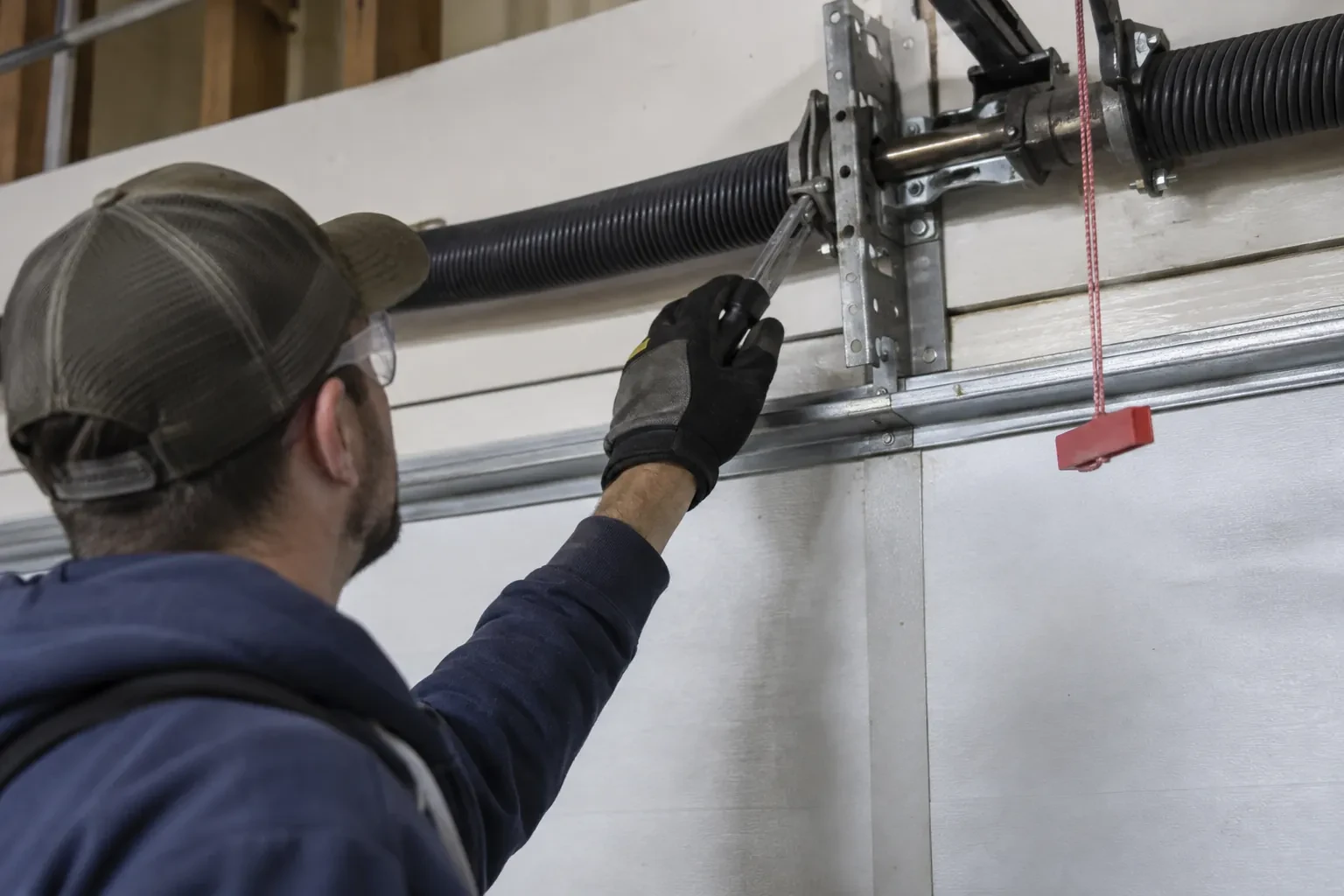
Yes, if you need the door open and the door is closed or nearly so. Pulling the handle frees the door from the trolley so it can be lifted by hand. Do not pull it while the door is open, because a door with a weak spring can drop. If the door will not lift by hand, or feels very heavy, leave it and mention that when you call, since it points to a spring rather than the drive.
How and how often is the rail lubricated?
On the interval the opener's own manual calls for, often every two to three years. With the power off, the old grease is wiped from the rail along the path the trolley travels, and a thin layer of white lithium grease is applied in its place. The door is then run a few times so the trolley spreads it. The door's own tracks, where the rollers run, are never greased; they stay clean and dry, and the rollers, hinges and bearings take a garage door lubricant once a year instead.
Openers & Access
Bigger photo, sooner job: Emergency Book soon Plan ahead
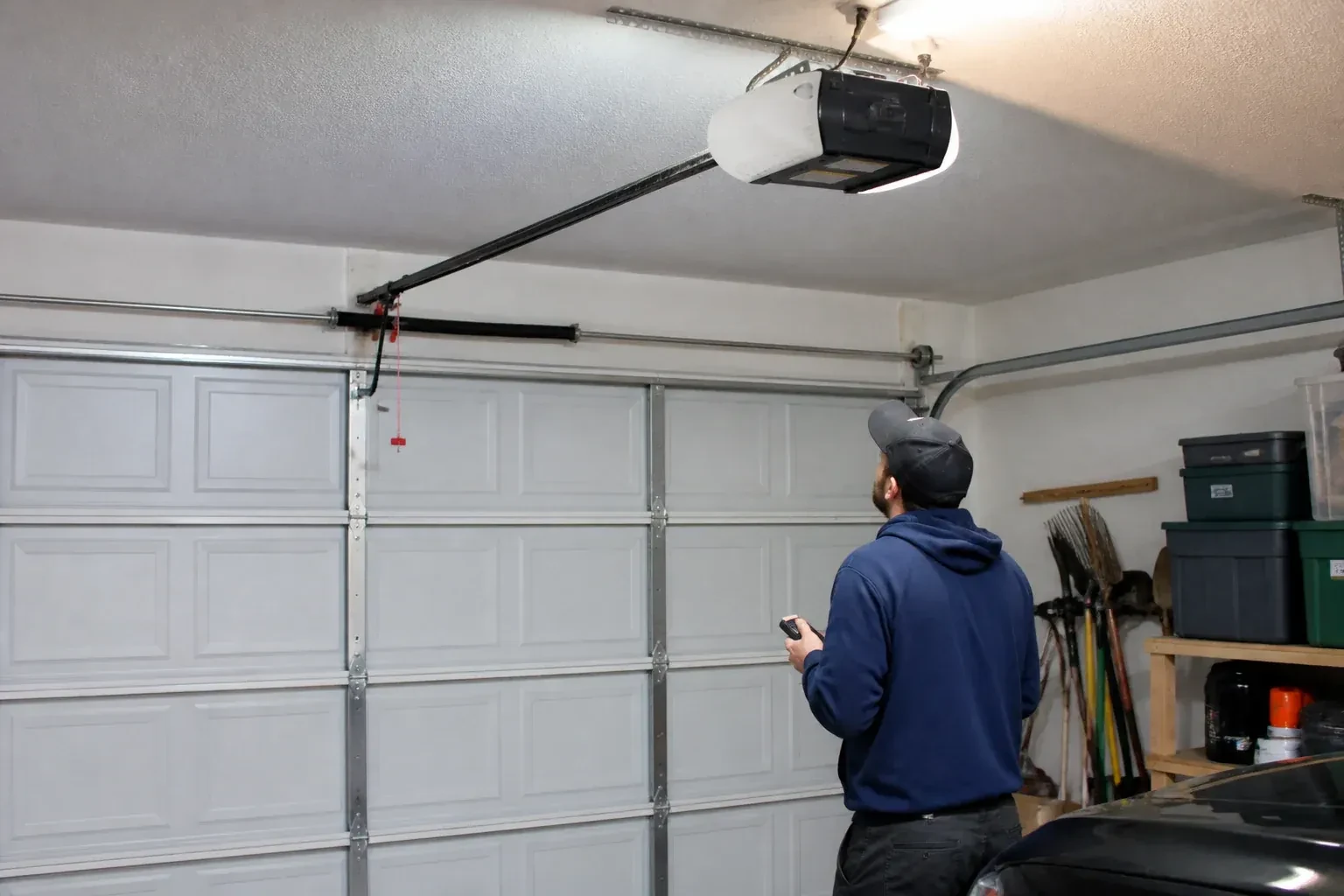 Book soonGarage Door Opener Diagnosis and RepairYou press the remote from the driveway and hear the motor hum overhead, a steady drone with no movement behind it.
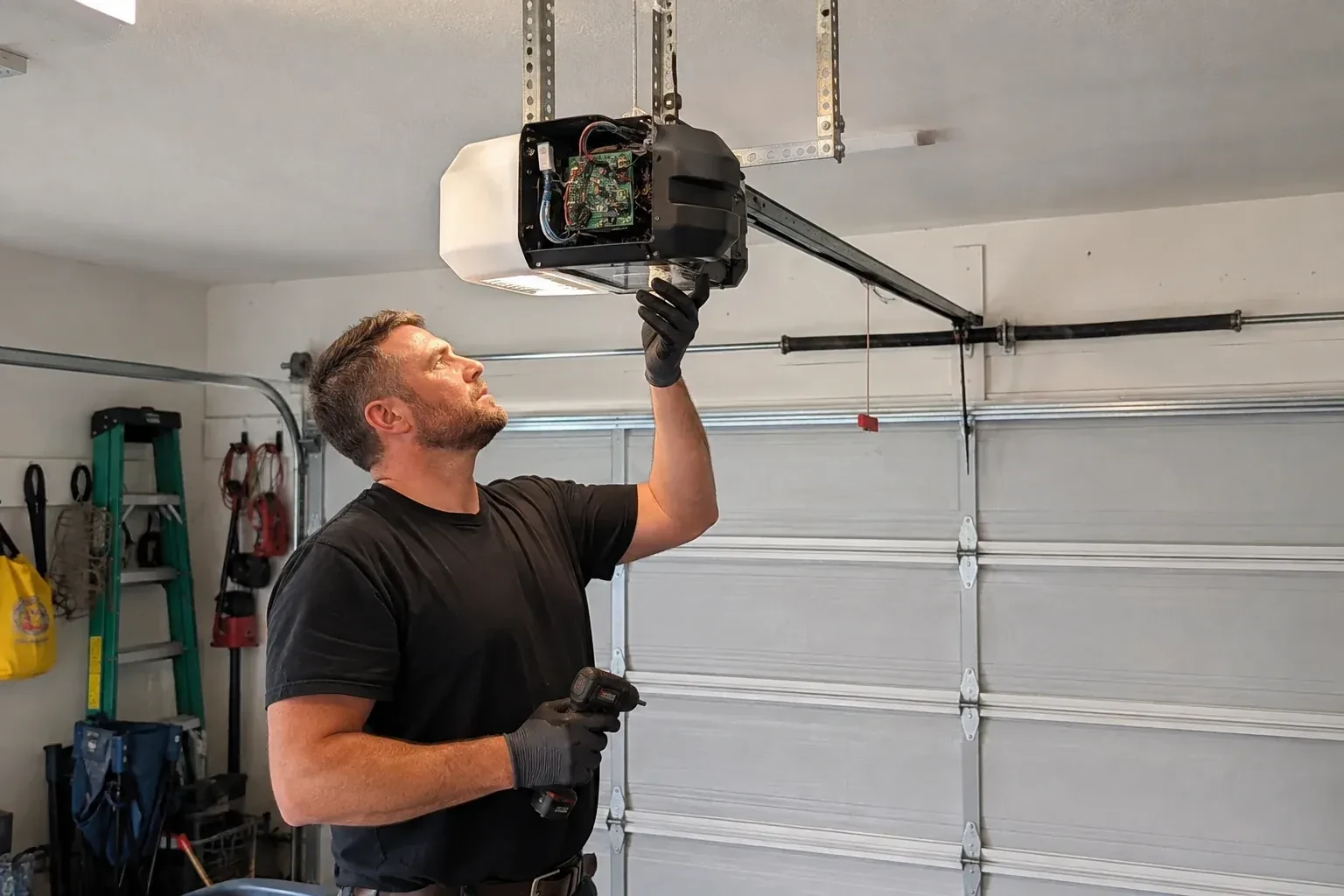 Book soonBelt-Drive Opener RepairSomeone tightened the belt last month to stop the sag.
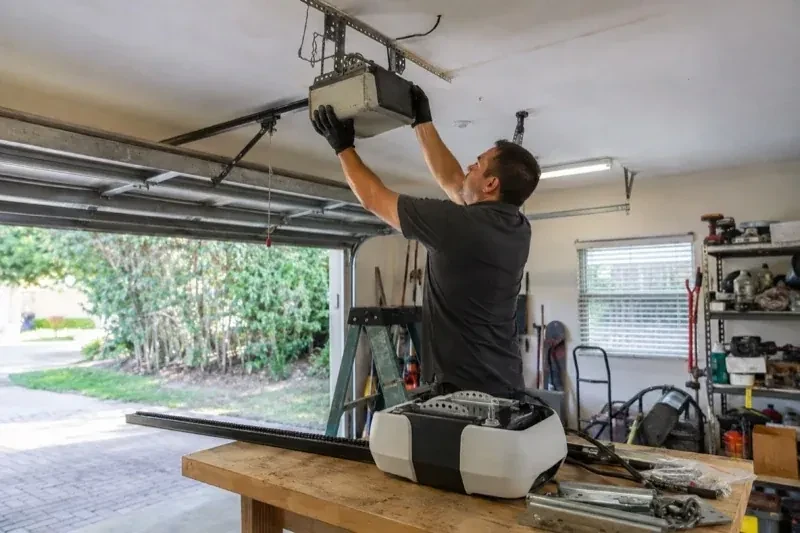 Plan aheadGarage Door Opener Replacement
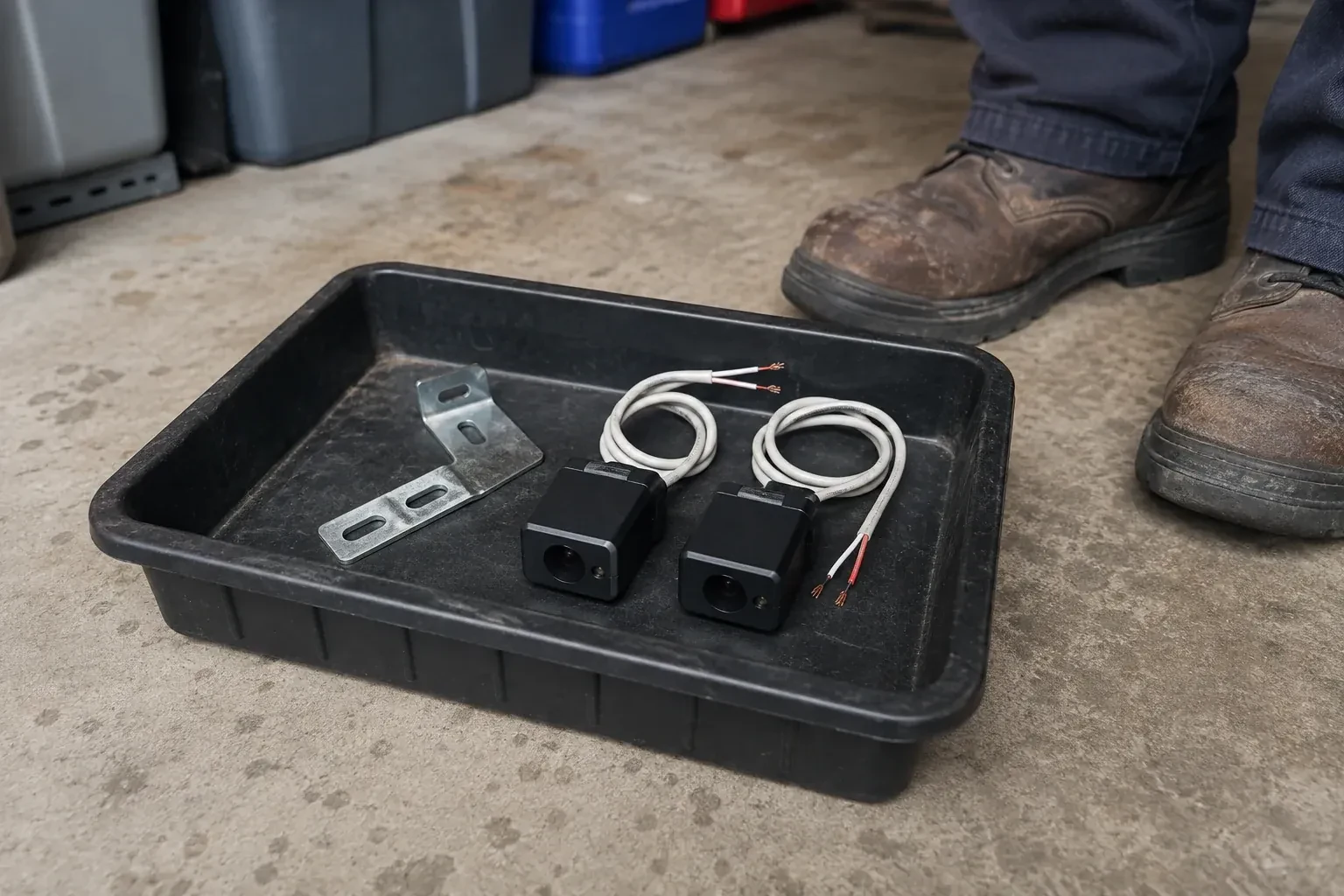 Book soonPhoto-Eye Sensor Alignment or ReplacementOn bright mornings the door will not close, then by lunchtime it behaves itself.
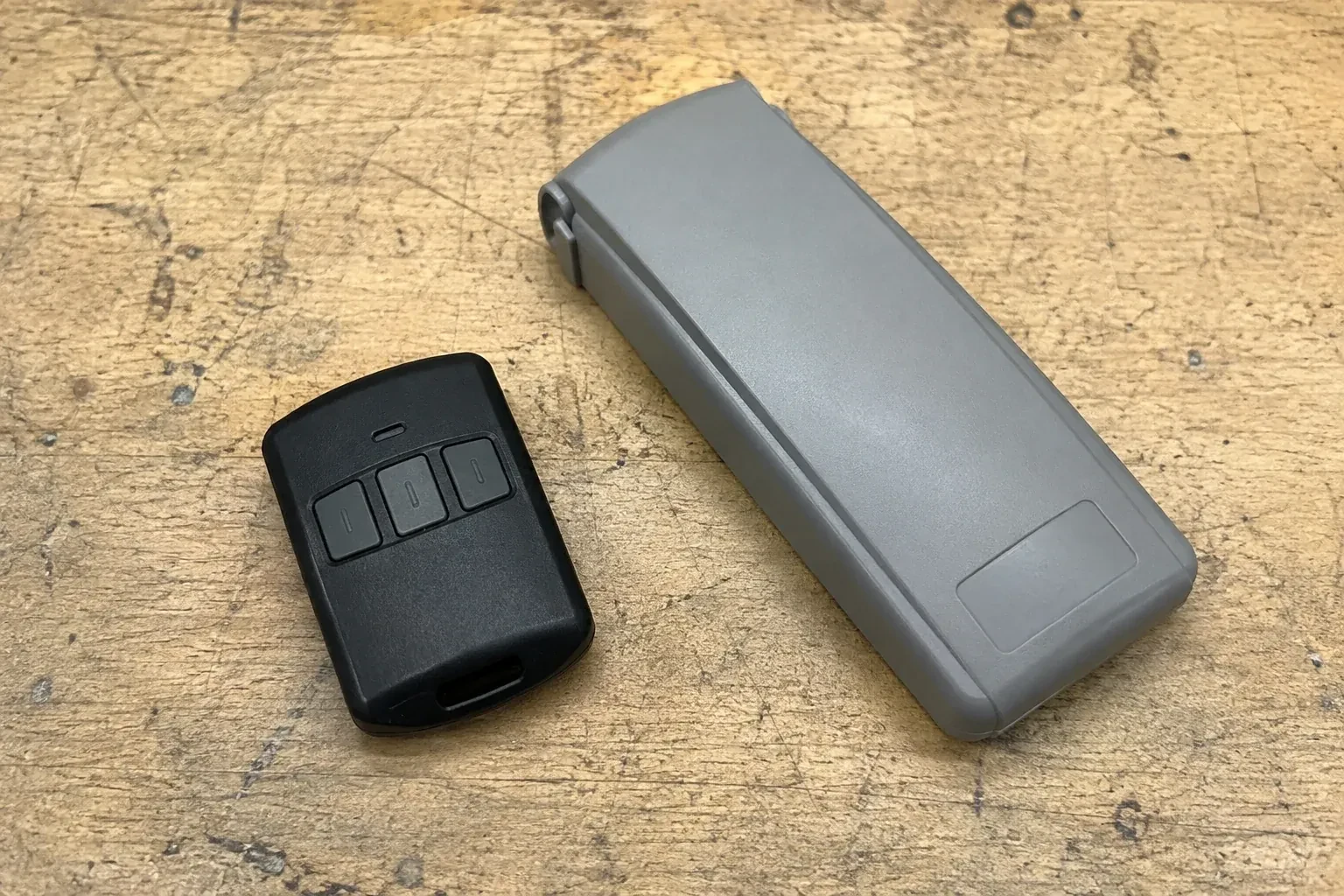 Plan aheadGarage Door Remote and Keypad Programming
Chain-Drive Opener Repair near you
Middlesex, Ontario
London information
- Town
- London, Middlesex, Ontario
- In business
- 12 years
- Hours
- Open 24/7 · nights, weekends and holidays, same fees
- Phone
- (226) 270-3930
- Visits
- On-site assessment preferred. Request a visit or call.
What the census means at the door
52%
Older homes. About 52% of homes in London were built in 1980 or earlier, according to the 2021 Census.
Older houses frequently have a garage door that was replaced once already, sometimes with a door chosen for the opening rather than the building. When that door reaches its end, there is a chance to pick a style that suits the house properly, and we measure with that in mind.
49%
A mix of homes. Single-detached houses make up about 49% of homes in London (2021 Census).
In a neighbourhood with both detached and attached homes, some customers decide alone and others report to a board or property manager. We adapt the visit accordingly, giving a homeowner options at the door and a manager a written summary they can circulate.
Nearby
Open 24/7
Request a visit
The motor runs, you can hear it working, but the door never moves.
Call now · open 24/7(226) 270-3930- On-site assessment preferred
- Same fees day, night or weekend
- 12 years in business